
How to Make a Morning Walk Actually Happen
A practical guide to making a short morning walk easier to start before the day gets loud, late, or crowded.
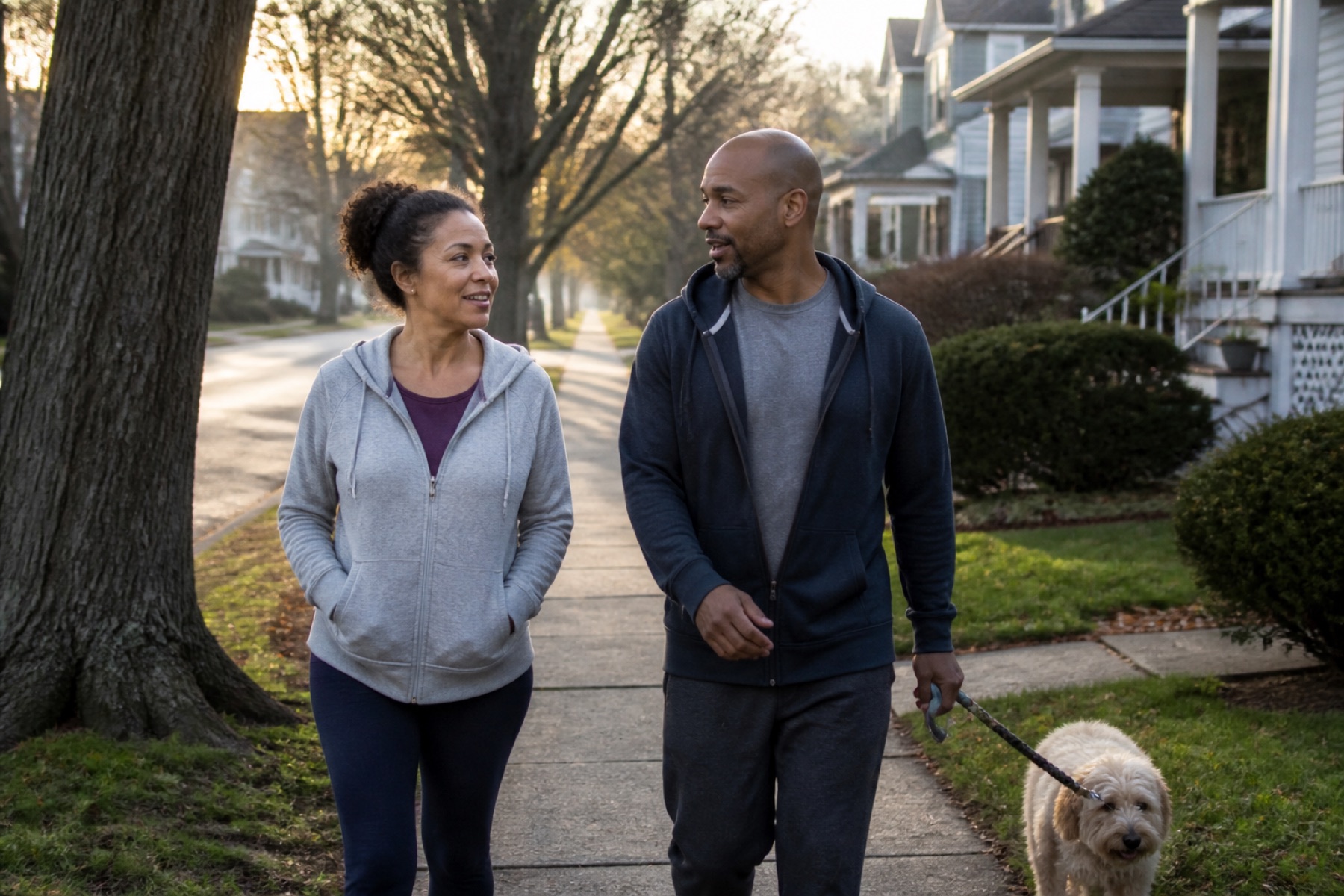
Make the first version smaller than the ideal
Morning walks often sound better the night before than they feel when the day starts moving. A repeatable version needs to be small enough for a normal morning, not just a perfect one.
Try ten minutes, one familiar loop, or a walk that ends back at the door before the rest of the routine begins. If the small version feels easy to start, it can survive more mornings.
Give the walk a clear first cue
A morning walk is easier when it follows something that already happens. Maybe you go after coffee starts, after school drop-off, after feeding everyone breakfast, or before opening the first work screen.
Choose one cue and keep it boring on purpose. When the walk has a predictable place, you do not have to remake the decision while the morning is already filling up.
Keep a late-start version ready
Some mornings run behind before you even get outside. Plan a backup that still counts: a shorter block, a walk to the corner, or a few extra minutes before the first errand.
The backup version keeps the routine from becoming all-or-nothing. A short morning walk can still give the day a cleaner start, even when it was not the walk you pictured.
Try it in Step Rival
Use Step Rival to test which morning walking window survives ordinary days. Keep the target gentle for a week, then notice whether the same small start makes walking easier to repeat.
Get the App