
How to Make Family Walks Fit Real Life
A practical guide to planning family walks that feel easy, flexible, and worth repeating on ordinary days.
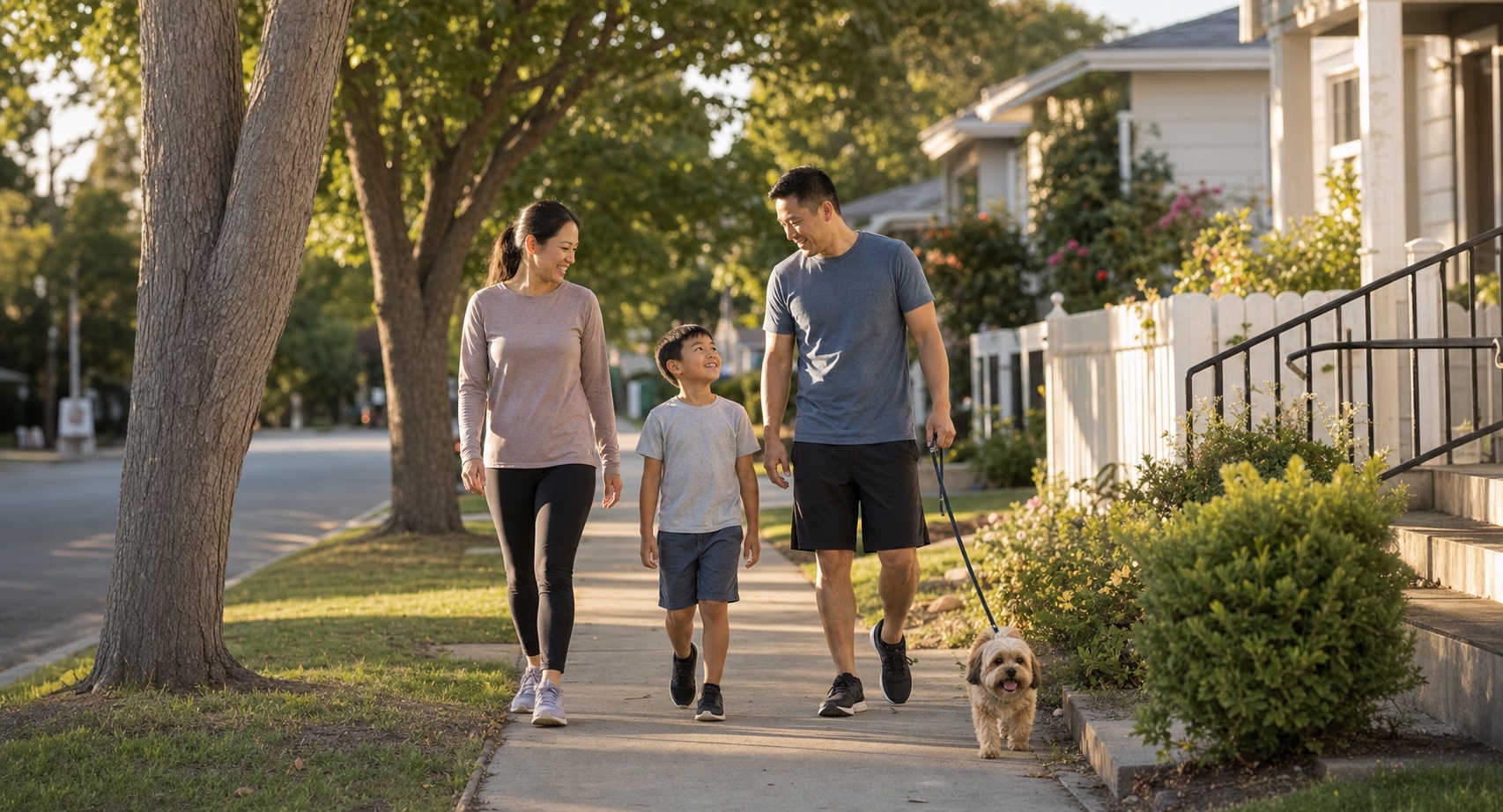
Choose the route for the slowest pace
A family walk works better when it is planned for the person who needs the easiest version. That might be a child who stops often, someone who likes a bench halfway through, or a family member who only has ten minutes before the next errand.
Starting with the gentlest pace keeps the walk from turning into a negotiation. If everyone still has energy, you can add another block or loop at the end.
Give the walk one small purpose
Family walks are easier to start when they have a simple reason. Walk to return a library book, look for a favorite tree, pick up one grocery item, or take a loop before dinner starts.
The purpose does not need to be important. It just gives everyone a reason to leave the house without making the walk feel like a formal event.
Let the finish line stay flexible
Some family walks will turn into a longer route. Some will end after one block because someone is tired, hungry, distracted, or just done. That is normal.
A flexible finish line makes the habit easier to repeat. The win is not proving that every walk went exactly as planned. The win is building a family rhythm that people are willing to try again.
Try it in Step Rival
Use Step Rival to make family walks visible without turning them into a strict performance. Pick a gentle target, notice the shared steps, and keep the rivalry playful.
Get the App