
How to Make a Dog-Walking Routine Work for Both of You
A practical guide to building an everyday dog-walking routine that leaves room for sniffing, pauses, and the amount of walking you each want.
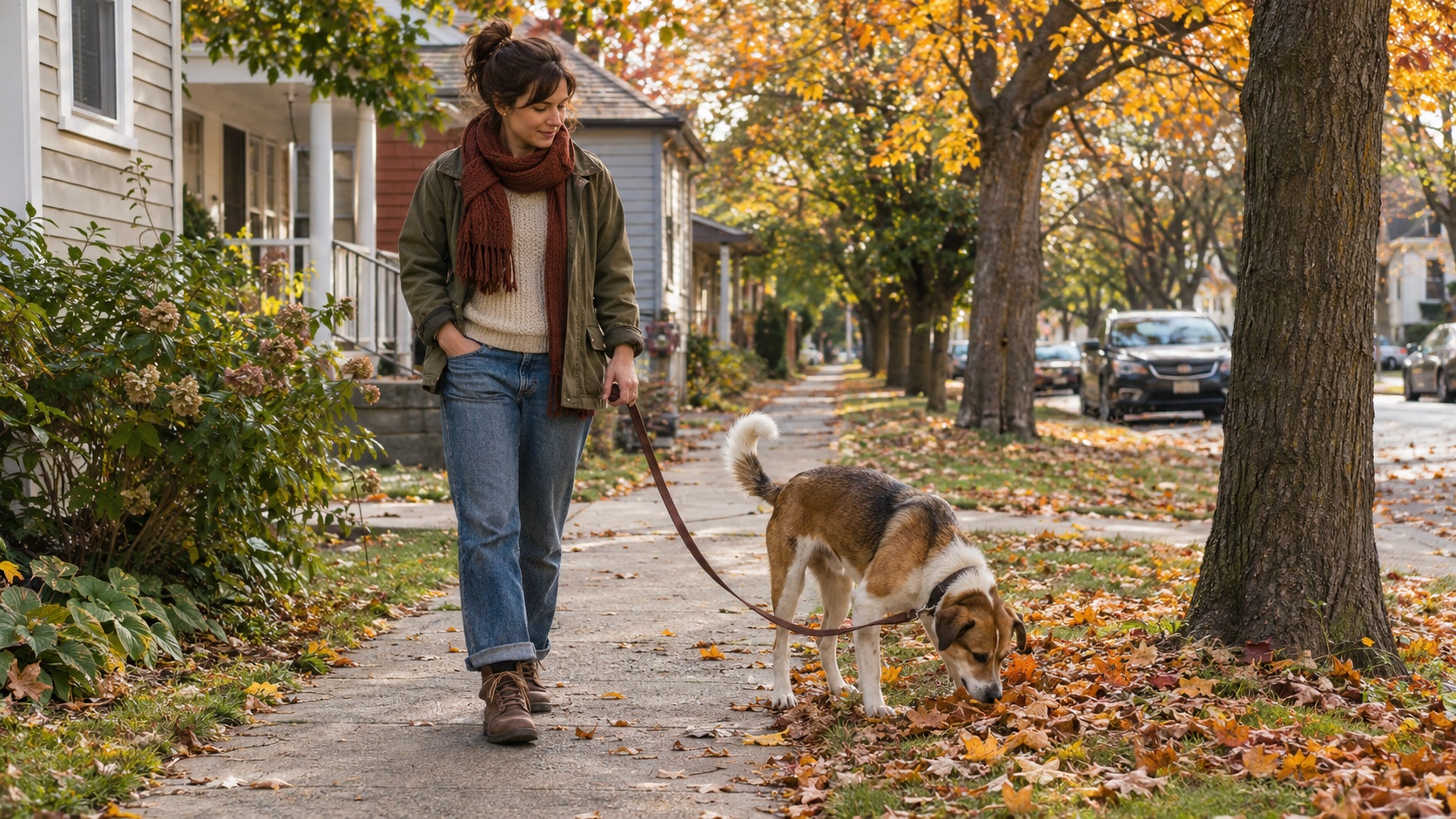
Build the walk around one dependable cue
Dog walks already have a reason to happen, but their timing can still drift around work, meals, errands, and the rest of the household. Choose one ordinary cue that can hold the most repeatable walk of the day, such as after breakfast, when work ends, or before the evening settles in.
Keep the first version simple: the same leash spot, the same door, and a familiar opening stretch. A dependable beginning makes it easier to leave without turning every outing into a fresh plan.
Let sniffing and pauses belong to the walk
A dog walk may not move like a solo walk. There can be long sniffs, sudden stops, repeated corners, and days when the usual loop takes a completely different shape.
Instead of treating every pause as lost walking time, let the shared outing have its own pace. Choose a route where stopping does not make you feel rushed, and measure success by getting out together rather than holding a perfectly steady stride.
Separate the shared walk from your extra steps
Sometimes the dog is ready to head home before you are finished walking. Plan an easy handoff instead of stretching the shared route into something neither of you enjoys.
You might return home and take one more solo block, add a short loop later, or let the shared walk be the whole walk that day. Keeping those choices separate protects the part of the routine that already works.
Try it in Step Rival
Use Step Rival to notice how the walks you already take with your dog add up. Keep the shared route easy, and add a solo loop afterward only when you want more walking.
Get the App